
7 Signs Your Deck Needs to Be Replaced
· By Ronney Schineider
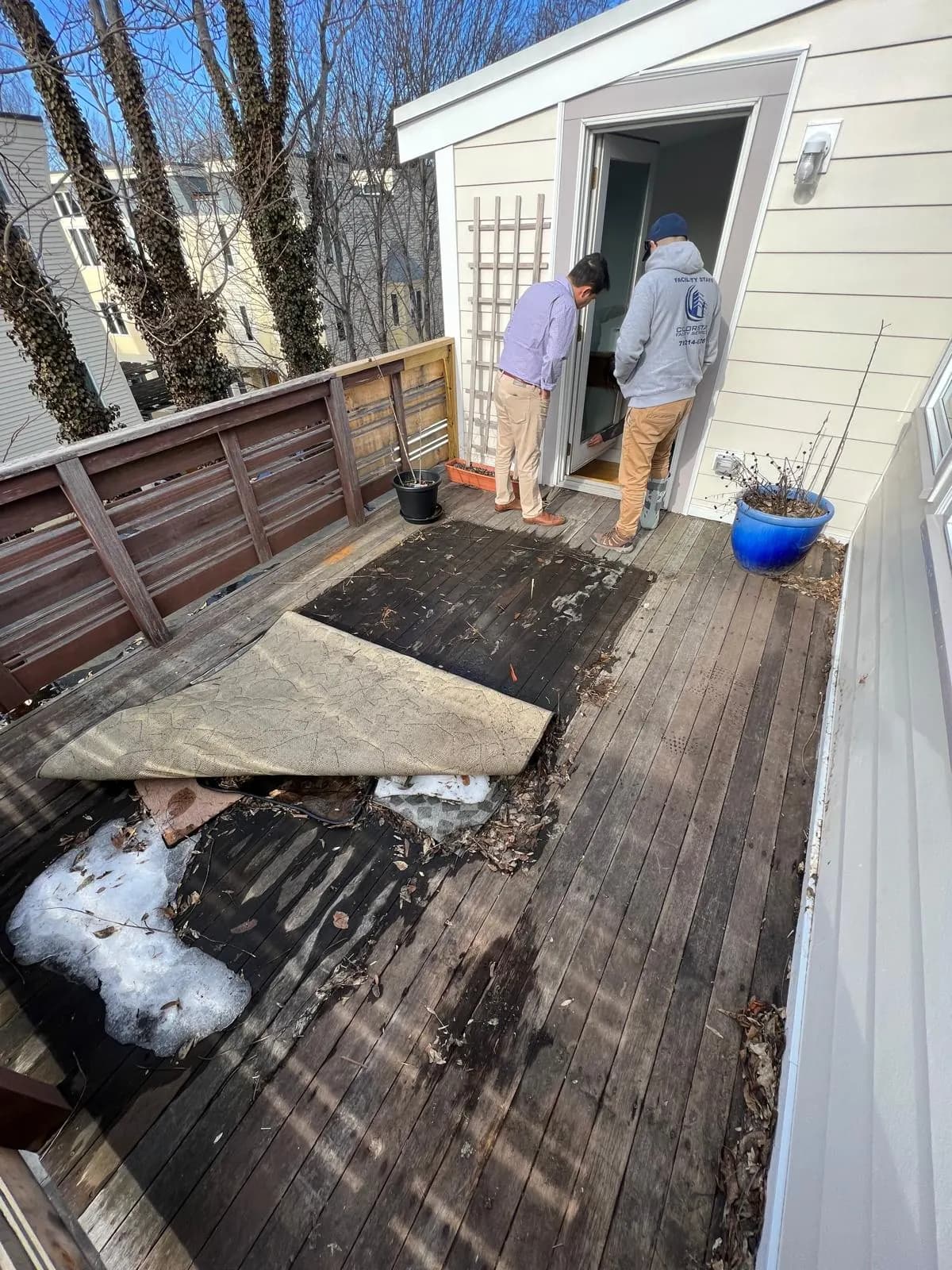
A deck lives a hard life in New England. It bakes in the summer sun, soaks through months of rain and snow, and cycles through freeze and thaw all winter long. Here on the North Shore, that constant swing between wet and cold is exactly what breaks a deck down from the inside out. Boards that looked solid a few years ago can quietly turn soft, fasteners rust, and the connections that hold everything together start to give.
The tricky part is that a failing deck rarely looks dangerous until something goes wrong. Most of the warning signs are easy to miss unless you know where to look. Below are seven signs that your deck may be ready for replacement, what each one means for your safety, and whether a repair might still be enough. If several of these show up at once, it is usually a sign the structure has aged past the point where patching pays off.
1. Soft or Rotting Wood
Soft, spongy, or crumbling wood is the clearest sign that a deck is in trouble. Press a screwdriver into the boards, joists, and support posts, especially in shaded, low spots where water sits. If the tip sinks in easily or the wood flakes away, rot has set in. You may also notice a musty smell or dark, discolored streaks along the grain.
Rot matters because it destroys the strength of the wood you cannot see. A little surface rot on a single board is often a straightforward repair. But when rot shows up in the joists, beams, or posts that carry the load, the deck is losing its ability to hold weight safely. Widespread rot in the framing usually points to replacement rather than a patch.
2. Wobbly or Loose Railings
Grab your railing and give it a firm shake. It should feel solid and barely move. If it wobbles, leans, or shifts when you lean against it, the connections holding it to the deck have loosened or corroded. Railings are your first line of defense against a fall, and a loose one is a real hazard, especially on a raised deck or around stairs.
Sometimes a wobbly railing is a quick fix: new hardware, tightened bolts, or reinforced posts. But if the railing is loose because the posts or the deck framing they attach to have rotted or split, the fix runs deeper. When the wood behind the railing is failing, tightening a bolt only buys a little time, and a full evaluation is smarter.
3. Loose or Corroded Fasteners
Take a close look at the nails, screws, and metal connectors holding your deck together. Popped nails, backed-out screws, and rusty, stained, or crumbling brackets are all warning signs. In our climate, older fasteners that were not rated for wet conditions corrode over the years, and rust weakens both the metal and the wood around it.
A handful of popped nails or a few screws to replace is normal maintenance. The concern is widespread corrosion, particularly on the joist hangers and the connectors that tie the deck to the house. When the hardware throughout the deck is rusting out, the whole structure is losing the connections that keep it stable, and that often tips the decision toward replacement.
4. Cracked or Sinking Footings and Posts
Your deck is only as stable as what it stands on. Walk around the base and look at the concrete footings and support posts. Cracked or crumbling footings, posts that have sunk or shifted, and a deck that feels like it tilts or bounces are all signs the foundation is failing. New England frost heave, where the ground freezes and lifts, is a common cause of shifting footings.
Post and footing problems are serious because they can let the whole deck settle or lean over time. A single post can sometimes be reset or reinforced. But when multiple footings have moved, or the deck is visibly out of level, the structure has often shifted too far to correct with a simple repair, and rebuilding on proper footings is the safer path.
5. Widespread Splintering and Surface Damage
Run your hand across the deck boards. Heavy splintering, deep cracks, cupping, warping, and large sections of peeling or worn finish tell you the surface has been beaten down by years of sun and moisture. Beyond looking rough, a splintered deck is uncomfortable and unsafe for bare feet, kids, and pets.
Surface wear alone does not always mean replacement. If the framing underneath is still sound, replacing the worn deck boards and refinishing the surface can bring it back to life. The real question is what is happening below the surface. When splintering comes paired with soft wood or failing framing, resurfacing is only covering up a bigger problem.
6. A Ledger Board Separating From the House
The ledger board is the horizontal board that bolts your deck to the house, and it is one of the most important connections in the entire structure. Look where the deck meets the wall. Gaps, pulling away, rusted bolts, water stains, or signs of rot along the ledger are among the most serious problems a deck can have. A failed ledger connection is a leading cause of deck collapse.
This is not a sign to wait on. Even if the rest of the deck looks fine, a ledger that is separating or rotting compromises everything attached to it. In some cases the ledger and its flashing can be repaired and properly re-secured, but if water has been getting behind it for years and rot has spread into the house rim or the deck framing, replacement is often the responsible call.
7. Age Past Its Expected Life
Even a well-built deck has a lifespan. A pressure-treated wood deck commonly lasts somewhere in the range of 15 to 20 years, and less if it was not sealed and maintained regularly. Composite decking tends to last longer, though its framing is often still wood and ages the same way. If your deck is pushing or past those years, age itself is a sign worth taking seriously.
An older deck can still be safe, but it deserves a closer look. Materials and building codes have improved over the decades, and a deck built to yesterday standards may not meet what is expected today. If your deck is aging and showing two or three of the other signs on this list, that combination usually means its remaining life is short and a replacement will serve you better than repeated repairs.
How a Pro Inspects Your Deck
A thorough deck inspection goes well beyond a glance at the surface. A professional checks the framing from below where possible, probes the wood for hidden rot, and pays close attention to the connections that carry the load: the ledger board and its flashing, the joist hangers, the posts, and the footings. They look for the difference between cosmetic wear and structural failure, because that difference decides whether you repair or replace.
From there, the honest answer comes down to how much of the deck is still sound. If the framing is solid and the problems are limited to boards, railings, or hardware, a targeted repair can be the right, cost-effective choice. When the rot, corrosion, or footing problems have spread through the structure, replacement is usually safer and less expensive over time than chasing one repair after another. Actual costs depend on your deck size, materials, and site, so the best move is a walkthrough and a free estimate. If you are on the North Shore, in Saugus, Malden, or a nearby town, a local inspection is the fastest way to know exactly where your deck stands.
Frequently asked questions
- Should I repair or replace my deck?
- It comes down to the framing. If the joists, beams, posts, and ledger board are still sound and the problems are limited to deck boards, railings, or hardware, a repair is often the better value. When rot, corrosion, or shifting footings have spread through the structure, replacement is usually the safer and more cost-effective choice over time. A professional inspection is the only reliable way to tell which situation you are in.
- How long does a deck last in New England?
- A pressure-treated wood deck commonly lasts around 15 to 20 years, and less if it was not sealed and maintained. Composite decking tends to last longer, but its framing is often still wood and ages the same way. Our freeze-thaw cycles and wet seasons on the North Shore are hard on any deck, so regular maintenance makes a real difference in how many years you get.
- What is the most dangerous deck problem?
- A failing ledger board, the board that bolts the deck to the house, is one of the most dangerous problems because it is a leading cause of deck collapse. Gaps, rot, rusted bolts, or water stains where the deck meets the house should be evaluated right away, even if the rest of the deck looks fine.
- How much does a new deck cost?
- The cost varies widely depending on the size of the deck, the materials you choose, and your site conditions. Because those factors change the number so much, the most accurate way to get a price is a walkthrough of your specific deck. We are happy to look at your deck and provide a free estimate with no obligation.
- Can you inspect a deck before deciding what to do?
- Yes. A proper inspection checks the framing, the ledger connection, the fasteners, and the footings, not just the surface, so you get an honest answer about whether a repair or a full replacement makes sense. It also gives you a clear picture of your deck safety before you spend anything.
Related services
Serving
Ready for an exact price?
Get a free, no-pressure in-home estimate. Real numbers for your home, not a phone guess.